


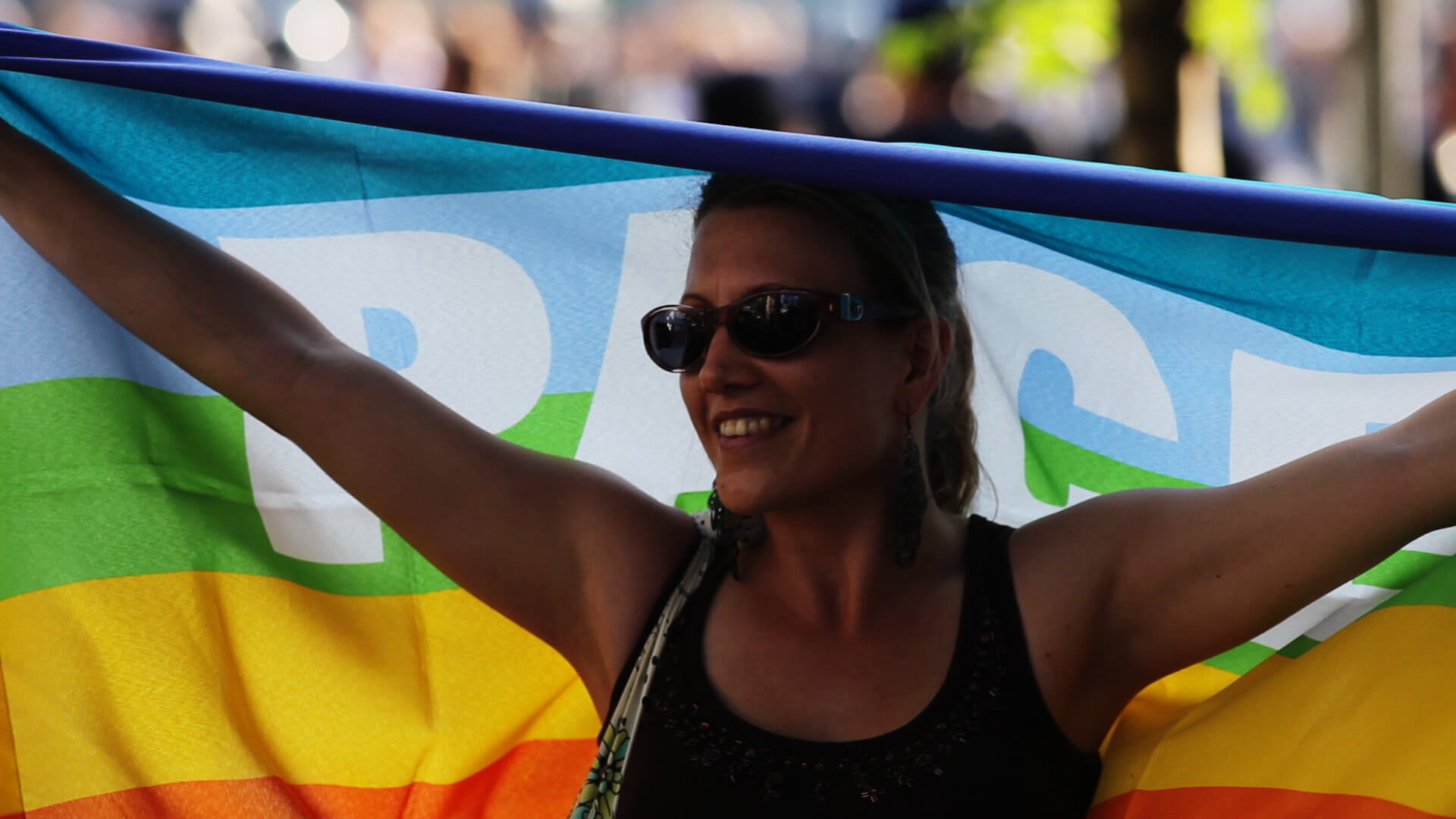


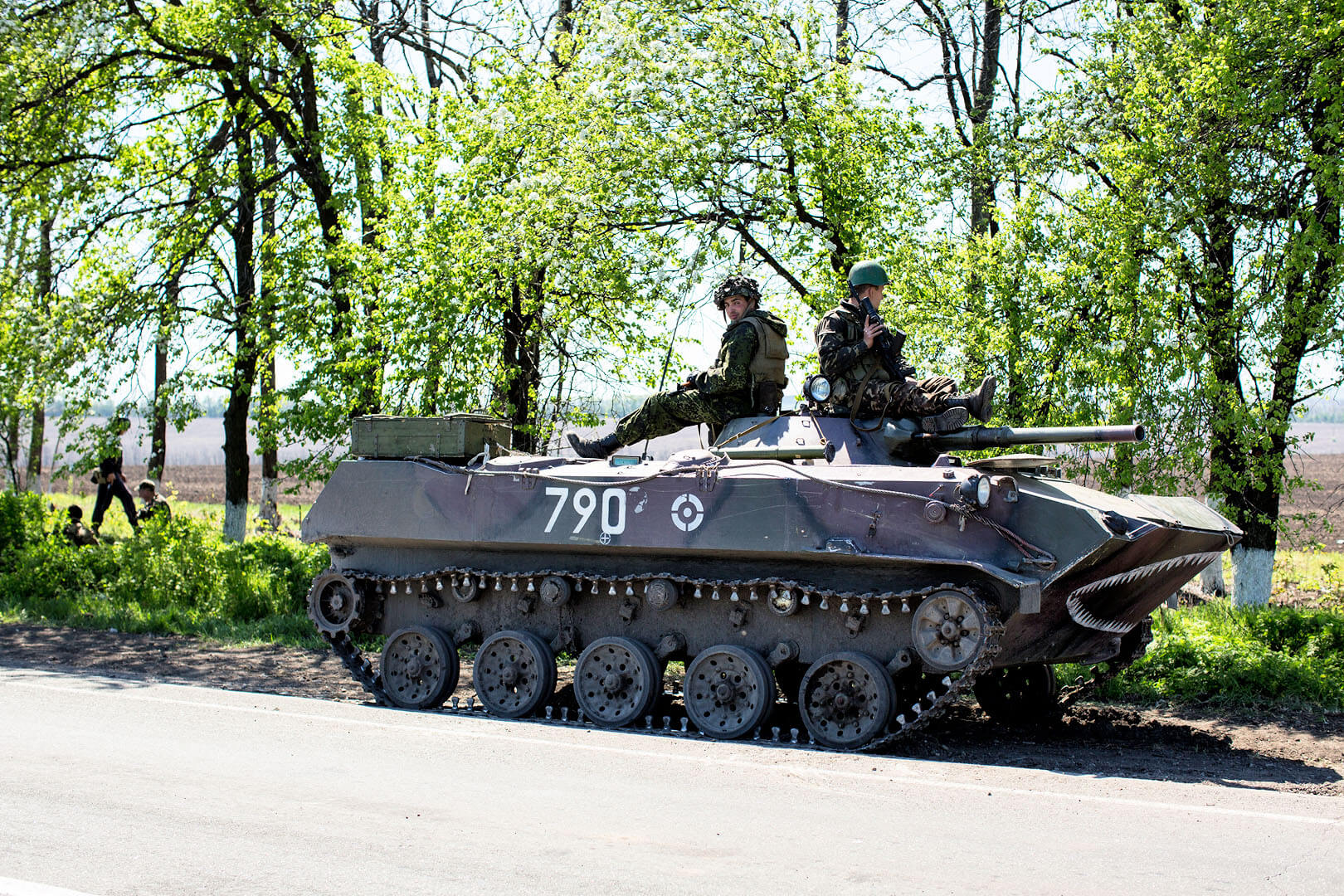


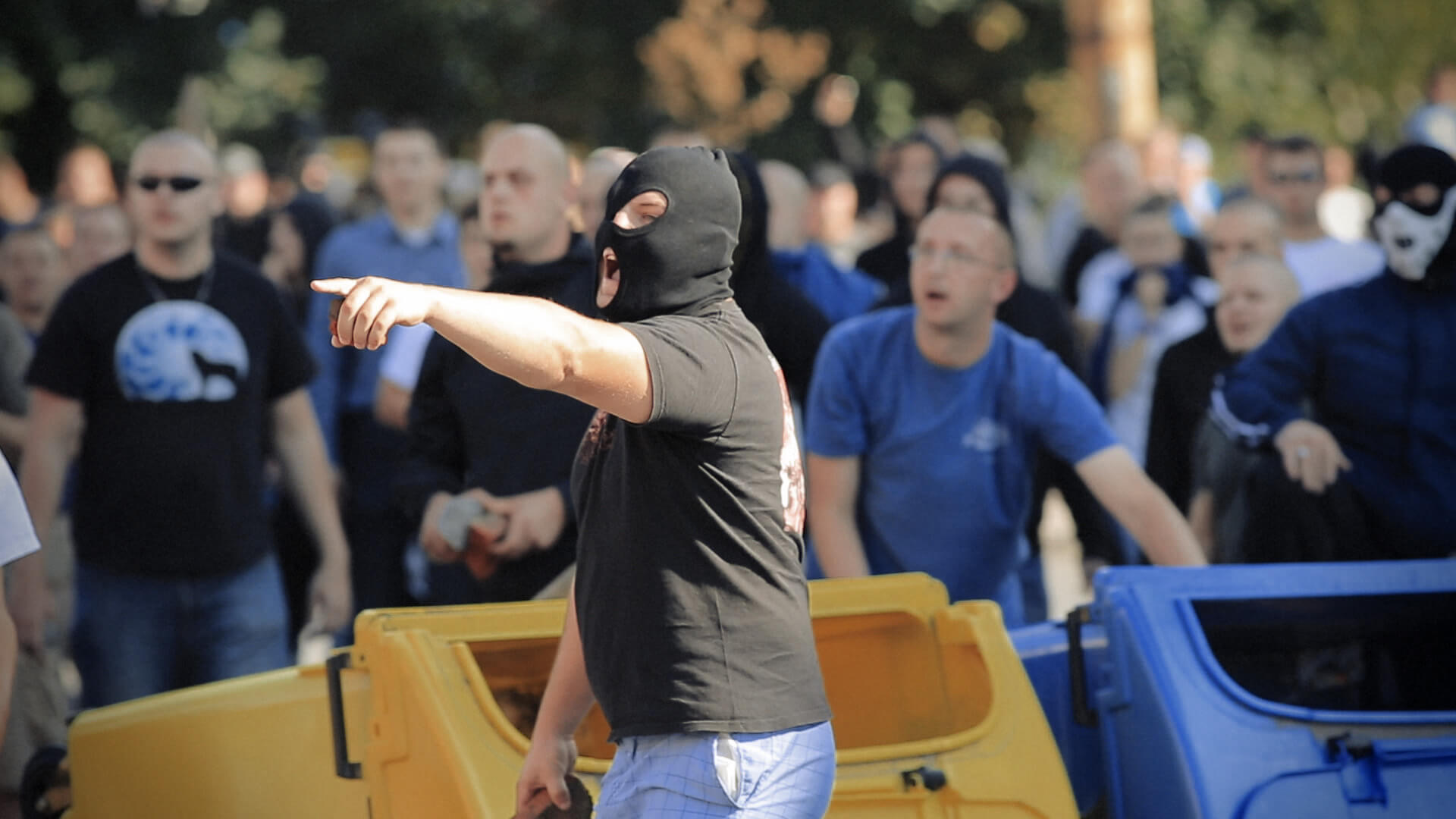


There are some issues in which, in contrast to others, most of the former SFR Yugoslavia countries are not falling behind compared to other countries of Europe. One of those issues is, of course, the new nationalism which is widespread over the whole Europe and its frequency is dependant on the country and the region in which it is manifested.As in other European post-socialist countries, right-wing politics was the most usual orientation of the new governments, which in the case of SFRY was...

The New Nationalism at the Heart of Europe is a large photo and video-art project, in which Tomáš Rafa maps the public manifestations of nationalism, extreme right, racism and lack of tolerance in different countries. Since 2009, the artist documents meetings of radical and revolutionary groups, but also the anti-government and anti-extremist demonstrations, marches and supporting events for the rights of the minorities or clashes of anti-Fascists with supporters of ultra right movements. read more


On Thursday, August 17th, 2017, police in Poland forcefully removed feminist activists who were participating in a sit-in to block the route of a far-right rally in central Warsaw. The Women’s Strike group and activists from Obywatele RP, who aimed to defend democratic principles in Poland, were attempting to prevent several dozen extremists from marching on Poland’s Armed Forces Day. The feminist protesters, many holding photos of Heather Heyer, the American woman killed during a...

On September 1, 2015, an anti-immigrant protest organized by the far-right People’s Party Our Slovakia (ĽSNS) and its leader Marian Kotleba took place in the city of Trnava. Around two hundred supporters gathered at Trojičné Square, chanting nationalist slogans and displaying anti-immigrant banners. The rally remained mostly peaceful, although one incident occurred when protesters tore a sign reading “I’m ashamed of you” from a young man’s hands. After the demonstration ended, a group of...

On 25 March 2025, Erik Ždiľa, a student at the Academy of Fine Arts and Design in Bratislava, presented his work Hymna (Anthem) in front of the Slovak National Gallery in Bratislava. The work was a sound installation in which a compressed-air compressor played the Slovak national anthem on a set of beer bottles. The work was presented in front of the Slovak National Gallery as part of the relay protest Art Will Not Be Silent! The relay protest took place in front of the Slovak National Gallery...

Far-right protests in Ceske Budejovice against the Roma community turned violent on Saturday, 29 June 2013, resulting in eight people being injured, including two police officers. More than 100 people were detained during the clashes, and police found baseball bats, brass knuckles, gas pistols and other weapons in possession of the demonstrators. Protestors had attempted to reach neighborhoods where the Roma population was prominent, leading to confrontations with the police. Officers used tear...
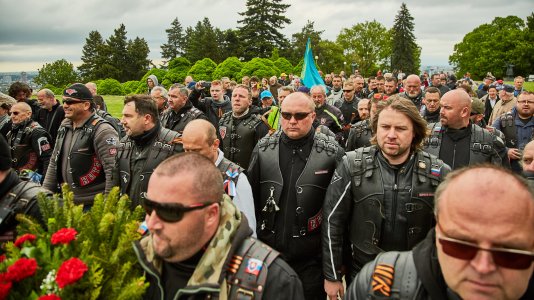
The Night Wolves, a Russian biker gang with strong ties to President Vladimir Putin, embarked on a 3,700-mile journey across Europe to commemorate the 70th anniversary of the victory over Nazi Germany. The group’s controversial route from Moscow to Berlin generated significant attention and led to complications with European authorities. This article examines the Night Wolves’ journey, their encounters with law enforcement, and the public’s reaction to their “victory...

Vienna, June 11, 2016 – A far-right Identitarian movement staged a high-profile protest in the heart of Vienna, igniting fervent discussions about their ideology and raising concerns about the rise of nationalist sentiments in Europe. The demonstration, held under the banner of “Defending Europe,” attracted both supporters and critics, prompting a closer examination of the movement’s objectives and the implications for the broader political landscape. The Identitarian...

Berlin Wedding, Germany, 30th April 2012 7,000 police officers were deployed on Monday and Tuesday to keep the demonstrations under control. Traditionally, the violent “anticapitalist Walpurgis Night demo” has passed through Friedrichshain and Prenzlauer Berg. This time, it was unexpectedly relocated to the Sprengelkiez and Brüsseler Kiez in Wedding, an area between the Wedding S-Bahn station, the northern shore of the Berlin-Spandauer Shipping Canal, and See- and Müllerstraße. This...

Slovakia
V79: Antifa vs. March of nationalists and far right movements against refugees and Islam in Bratislava
Hundreds of people participated in a neo-Nazi demonstration and march on Saturday, 25 June 2016 in Bratislava, Slovakia. The demonstration was held “against the dictatorship of Brussels and for stopping the liquidation of Europe,” according to the organizers. There was also a concurrent assembly by those opposed to extremism. The event was attended by fewer people than last year, and some of the demonstrators were from the Czech Republic. Event was attended by approximately 500 people, but more...

On August 29, 2009, approximately 200 Roma residents of Turzovka, a town in the Kysuce region of Slovakia, left their homes a day before a planned anti-Roma protest by the extremist organization Slovenská Pospolitosť (Slovak Brotherhood). Local residents and the town’s mayor confirmed the exodus, with some Roma unable to fit on buses to Ostrava and resorting to taxis and cars. In anticipation of the protest, dozens of police vehicles and hundreds of officers were dispatched to Turzovka. A...
Legida, short for “Leipzig gegen die Islamisierung des Abendlandes” is a German right-wing populist movement that emerged as an offshoot of the more prominent Pegida movement. Legida, which is centered in the eastern city of Leipzig, was established in early 2015 and has been organizing weekly demonstrations since then. Like Pegida, Legida’s stated aim is to protest against what it sees as the Islamization of Germany and the perceived failure of the German government to...

The first scenes of The Cross (Krzyż) unfold in the aftermath of the 10 April 2010 Smolensk plane crash, which killed President Lech Kaczyński, his wife Maria, and 94 members of the Polish political and military elite. In the shock that followed, a symbolic wooden cross was erected outside the Presidential Palace on Krakowskie Przedmieście in Warsaw. Intended initially as a temporary memorial, the cross quickly became the centre of a heated national dispute. What began as an improvised shrine...