







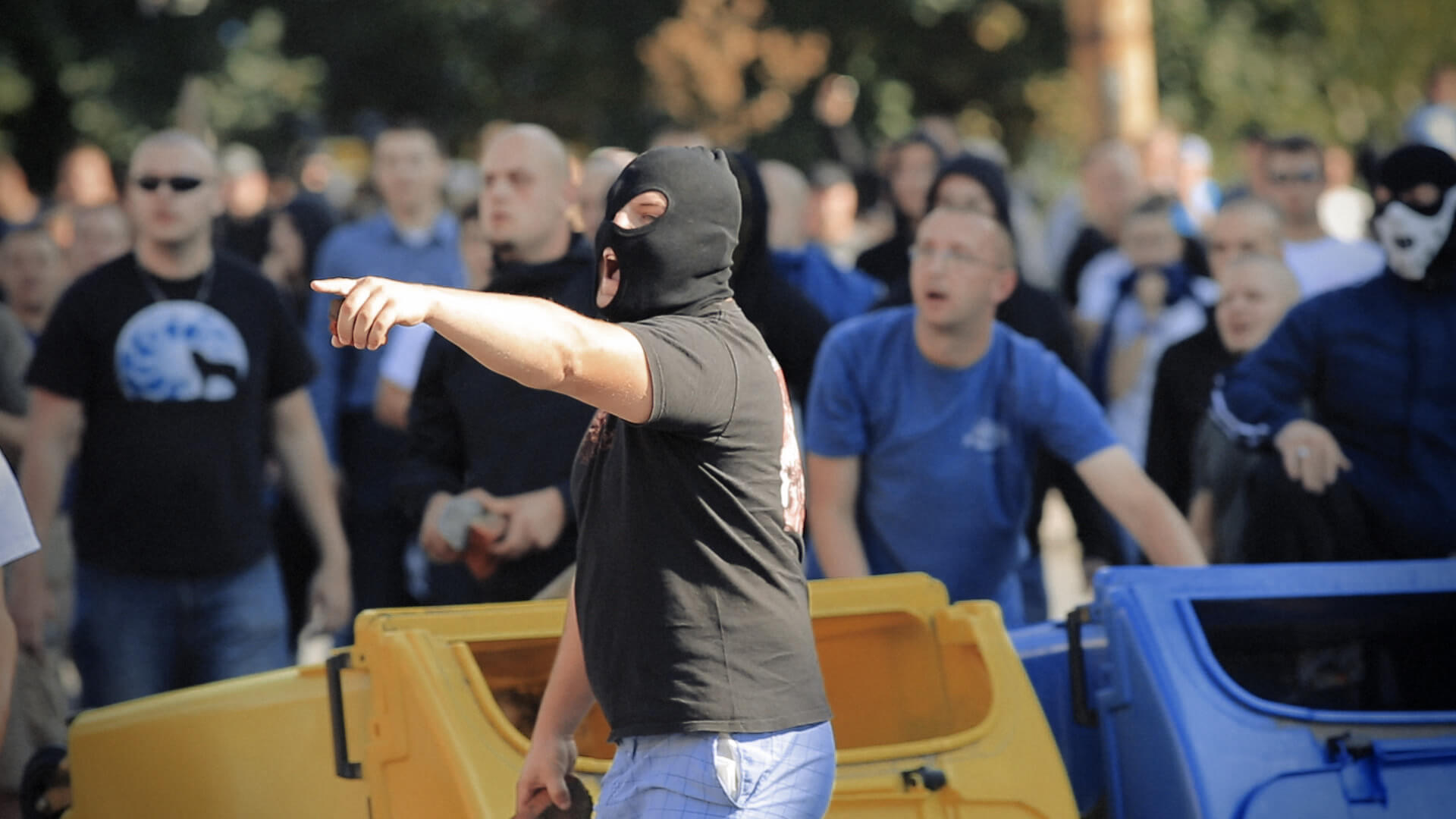


On September 1, 2015, an anti-immigrant protest organized by the far-right People’s Party Our Slovakia (ĽSNS) and its leader Marian Kotleba took place in the city of Trnava. Around two hundred supporters gathered at Trojičné Square, chanting nationalist slogans and displaying anti-immigrant banners. The rally remained mostly peaceful, although one incident occurred when protesters tore a sign reading “I’m ashamed of you” from a young man’s hands.
After the demonstration ended, a group of participants drove to the village of Gabčíkovo, where the government planned to accommodate refugees in a former dormitory. There they were joined by Hungarian nationalists from the Sixty-Four Counties Movement (HVIM, Hatvannégy Vármegye Ifjúsági Mozgalom) and members of Jobbik. The police blocked the main access roads and prevented the demonstrators from entering the village center. Local residents, mostly of Hungarian ethnicity, observed the situation from a distance and did not join the protest.
Gabčíkovo’s mayor Iván Fenes urged citizens to stay calm and avoid confrontation. Just a month earlier, in August 2015, a local referendum had shown overwhelming opposition to the refugee center — 96 percent voted “no.” The village thus became a symbol of resistance to the government’s migration policy.
The events of September 1, 2015 revealed how the issue of migration became both a tool of political mobilization and a symbolic platform for cooperation between Slovak and Hungarian far-right groups. This convergence linked local nationalism with Central European extremism and reinforced the rhetoric of fear toward “the other.”


