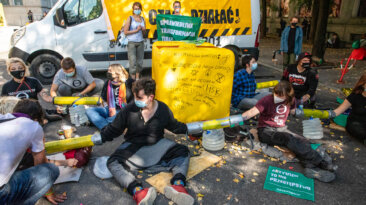








On November 10, 2021, in front of the Zachęta National Gallery of Art in Warsaw, the civic group known as “14 Women from the Bridge” held a press conference. The women, who in earlier years had stood on the Poniatowski Bridge to block the annual Independence March, announced that they would withdraw from their planned counter-demonstration scheduled for November 11 at Rondo Praw Kobiet (formerly Rondo Dmowskiego).
The decision followed the government’s move to grant the Independence March, organized by Robert Bąkiewicz and far-right nationalist groups, the official status of a state event through the Office for Veterans and Repressed Persons. This effectively placed the march under the protection of state institutions, including police, military, and security services, while delegitimizing any civic counter-actions.
The activists stressed that under such conditions their protest lost its meaning and became technically impossible to carry out. Surrounded by thousands mobilized by radical nationalist and neo-fascist circles, they could not ensure safety nor communicate their message effectively.
This episode highlighted how the appropriation of Independence Day by far-right groups, with the support of state authorities, narrowed democratic space and silenced alternative voices. The withdrawal of the 14 Women from the Bridge thus symbolized both the limits of civic resistance and the ongoing struggle over the meaning of independence and democracy in Poland.